
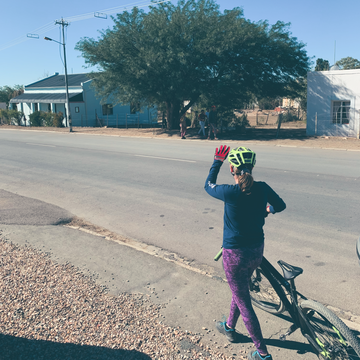
 Whilst spending time in South Africa in April, I was reminded about the importance of being seen. When I walked, drove and rode my bike through the streets of a small village, I was greeted and waved at, which not only made me feel very welcomed, but I also started to experience myself differently.
Although it’s hard to put in words, the best way to describe it is: I felt more human again. I was seen and greeted as me vs. as someone I might represent or a role I might take on. This in turn reminded me of the Zulu greeting of “Sawubona”, which means “I see you.”. This greeting implies that I exist, because I’m seen. Bonnie Badenoch in her book “The heart of trauma” cites this greeting in order to illustrate the importance of "warm interdependence", which is a natural state in our lives. Even though our culture, which is very left brain hemisphere dominant, encourages and celebrates self-reliance, self-regulation and self-care, we need the other in order to exist and thrive.
0 Comments
 Projections. Stories. Reality. For Christmas I was a gifted the book of “The Midnight Library", which I've found a very inspirational and thought provoking read. In this novel, the philosopher Thoreau is named and quoted numerous times. One quote in particular made me stop and reflect:
"It's not what you look at that matters, it's what you see." (Henry David Thoreau) I've been contemplating a lot about projections, how we view the world and how our narrative shapes our reality. It's interesting to observe in myself what story I put onto a one-liner email, how I interpret a facebook post or what I read into a simple text message. Ultimately, I'm restricting myself and closing opportunities that are there, but I can't perceive as such. My intent is definitely to catch those moments when I'm filling in the gaps with all sorts of speculations that are neither helpful nor true and then to stay present with what really is vs. my wild interpretation of it. I'm wishing you a happy new year 2021 where we hopefully can distinguish a little bit more between what we look at and what we see. And maybe there is space to see things and situations differently. |
BlogYoga, well-being and mindfulness... always walk in beauty. Categories
All
Archives
September 2022
|
 RSS Feed