
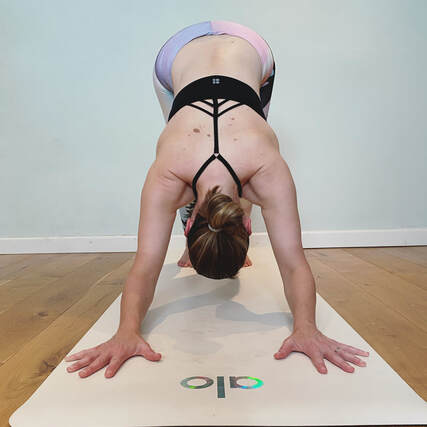
 In Yoga, we often cue to let go and release, to soften and to surrender. Even though, I feel that this is an important part of regaining balance in the body and life, it’s only part of the work and on its own only very limited in its effectiveness. The other part of the work is encouraging muscles that have lost their ability to hold onto energy, i.e. hypo-responsive muscles, to regain that skill and to thereby become fuller and more present. The muscles that are overworking, hyper-responsive muscles, benefit from letting go. However, hypo-responsive muscles have moved into a more collapsed state that does not benefit from releasing, as there is nothing to be released. The protection in those muscles is a distancing vs. a holding on. Inviting hypo-responsive muscles to soften encourages them to further move into collapse, i.e. further away from balance.
Those parts of ourselves that have gone away need kind encouragement to return. Working with dosage is a key aspect in the work. Gently inviting more aliveness to increase the capacity for holding onto energy is crucial. The question is: What is missing? What is not present? And then to listen to the silent voices within. I’d love to hear your reflections on your missing parts and the areas in the body that tend to go away.
2 Comments
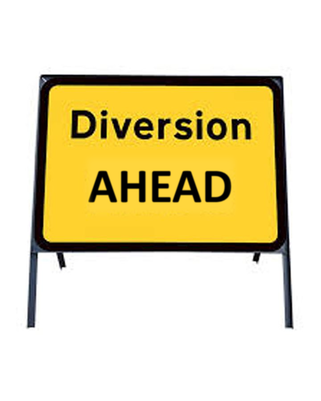 In the last week and a half I have been caught out by a lot of road works and was sent on many diversions. For me, that represents very accurately what’s happening in my life. I feel that there have been a lot of distractions, some further dismantling, but also a laying down of some foundation for the future; an investment into what is to come.
Even though it feels bumpy and disruptive at the moment and literally some of my usual journey times were doubled, I can also see how this is a re-orientation towards something more solid, stronger and more beautiful. My feeling is that I have been sent around the houses on many different levels and ended up in a lot of cul-de-sacs, had to reverse and try a different route. My sense is that these detours are part of life and instead of fighting them, I’d like to bring curiosity to them and trust that this is exactly where I need to be. And very importantly, I start to get a glimpse of something brighter.  The definition of chaos according to the online Cambridge dictionary is: “a state of total confusion with no order”. For me, this currently describes very accurately the state of the world externally as well as our internal landscapes. The state of our environment including the current heat wave, our economy with rising energy prices and inflation, the turbulences in politics, the war in Ukraine, the pandemic, including effects not only on our mental and physical health, but also on our health system and job market have all contributed to a sense of chaos, i.e. a lack of solidity and structure, where seemingly one random event is followed by another. One moment, we’re in lock down, the next we’re concerned about supplies of building materials, the next we’re shocked by Russia invading the Ukraine, which is followed by travel chaos and melting runways, railways and roads.
In myself and in my clients, I have noticed a lack of orientation and a feeling of free fall. With little certainty, we then seek structure and control. However, I feel that everything is in flux, everything is moving and there is little that this is certain and we can hold onto. Yet, there is opportunity in chaos, too. Instead of holding onto what is, maybe this is the time to re-order and re-balance, but not in a controlling way. This might be the right time to consider our overall vision for our lives from an alignment point of view and to ask the following questions: What is important to us and what are our priorities? What do we want our lives to feel and look like? What is emerging right now?  Since the beginning of the pandemic, I have been studying extensively with Dr. Bonnie Badenoch, a psychotherapist, author, mentor and speaker. She leans heavily into Ian McGilchrist’s work of the divided brain, which I have found increasingly fascinating. It is proposed that the left side of the brain attempts to create certainty through categorisation. New information is dismembered and sorted according to familiar classifications. The left side is about plans and goals; it continually asks the question: How will this benefit me? Protocols, interventions and task-orientation is coming out of this side of the brain. There is an “either/or” perspective and a tendency towards judgement. The cortical columns of neurons in the left side of the brain are relatively isolated and there are far fewer interconnections. It could be said that the information becomes somewhat dead.
On the other hand, the right side of the brain orients us to the space between, the “relational space” and how it is unfolding from one moment to the next. Everything is held in context and becomes a unique experience that is unrepeatable. Whereas the left side of the brain is concerned with either/or, the right side of the brain can accept the paradox and a both/and perspective. There is an awareness that there is uncertainty and with that a potential for both suffering and meaning. The cortical columns of neurons in that side of the brain are “richly interconnected”, which makes it a well-wired network. It is not about vilifying the left side of the brain; it’s about understanding that both hemispheres are important with their relationship to each other being vital. However, it is crucial the right side takes the lead and the left supports. Both McGilchrist and Badenoch postulate that a significant shift in society towards “left dominance” has happened, which essentially prevents us from being fully present and in our bodies. We’re unable to process stress and trauma and derive meaning from life, which can only happen when we inhabit and lead from the right side of the brain. 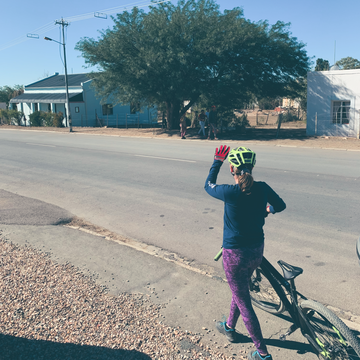 Whilst spending time in South Africa in April, I was reminded about the importance of being seen. When I walked, drove and rode my bike through the streets of a small village, I was greeted and waved at, which not only made me feel very welcomed, but I also started to experience myself differently.
Although it’s hard to put in words, the best way to describe it is: I felt more human again. I was seen and greeted as me vs. as someone I might represent or a role I might take on. This in turn reminded me of the Zulu greeting of “Sawubona”, which means “I see you.”. This greeting implies that I exist, because I’m seen. Bonnie Badenoch in her book “The heart of trauma” cites this greeting in order to illustrate the importance of "warm interdependence", which is a natural state in our lives. Even though our culture, which is very left brain hemisphere dominant, encourages and celebrates self-reliance, self-regulation and self-care, we need the other in order to exist and thrive. For the last couple of months I’ve been fascinating on the body skill of “containment”, i.e. the ability to hold onto and regulate energies that are arising from within, including stress and emotions. As much as we need to learn how to say “no” and set clear boundaries, it’s equally important that we learn how to manage our own internal energies, which is very different from squashing them down. Containment enables us to pause and thereby facilitates a position of more choice and therefore freedom. According to the Bodynamic system, a Danish school of body psychotherapy, there are several muscles that hold the potential for greater containment. In this short video I have prepared, I’ll talk you through a simple exercise of activating TFL and the IT Band, which are related to this particular body skill and which are located on the outside of the thigh. I hope you’ll find it useful.
Let me know your experiences of doing this short video.  Inspired by one of Merete Holm-Brantbjerg’s online presentations, I have been thinking about sustainability of change in a yogic and therapeutic environment. Change in that context has two components: 1) The opening up of something new and the gaining of access to new resources and skills. 2) The holding on to the new resources and skills that have been opened up.
The second aspect of change is about sustainability and it’s often the harder part. In my own process I have experienced transformation and gained new resources that I have subsequently lost again. Often the response to the loss is a “working harder”. However, this approach leads to areas in our bodies that are already in hiding to go away further, which in turn will lead to less of us being present. When we’re less present the skills of containment and orientation are lessened, too. For me, the key to sustainable change is therefore to work with the areas in our bodies that have the tendency to give up, i.e. hypo-responsive areas, to teach them gently and slowly to hold more energy and thereby to increase our capacity for containment and safety. Contrary, working harder and forcing will actually move us further away from ourselves, as the ability to be present is reduced. What has supported you in holding on to change?  German Forest and Lake. I have often written about my own personal process with regards to “not taking things personally”. Recently, when I had a session with my mentor and supervisor, there was another layer that emerged from that. Even though I understood the collapse of the internal boundary beforehand, which is essentially what “taking things personally” is, I experienced deeper layers underneath that; feelings that I distanced myself from. I had been frequently working with my mentor on staying in my body without interpreting sensations or coming to conclusions too quickly. I often felt criticised when she guided me back to my body, as I really wanted her to listen to what I had to say or what insights I had in that moment. I perceived her guiding me back as a judgement, even though objectively I understood that she was coming from a very neutral, allowing and kind place.
I interpreted her intentions and directions as “I’m not enough”, “I’m not doing this right” and “I should be somehow different”. In those moments, my heart was pounding and I felt very exposed and vulnerable. I could feel the increased blood flow to my face, a sign of feeling ashamed. My last session with her was a real breakthrough for me, as I could stay with the physical sensations and discovered the huge amount of fear in my system, which I often override or don’t acknowledge. My go to place has been anger, fight or action. In that moment, I could sit with my helplessness, which touched into very young places inside of myself. Even though it was uncomfortable, it was manageable and the energy eventually got processed and moved. I feel the moment I moved beyond the “taking things personally”, I could really be with the emotion of fear, ultimately evoking a deep shift inside of myself. What are the emotions you tend to distance yourself from? 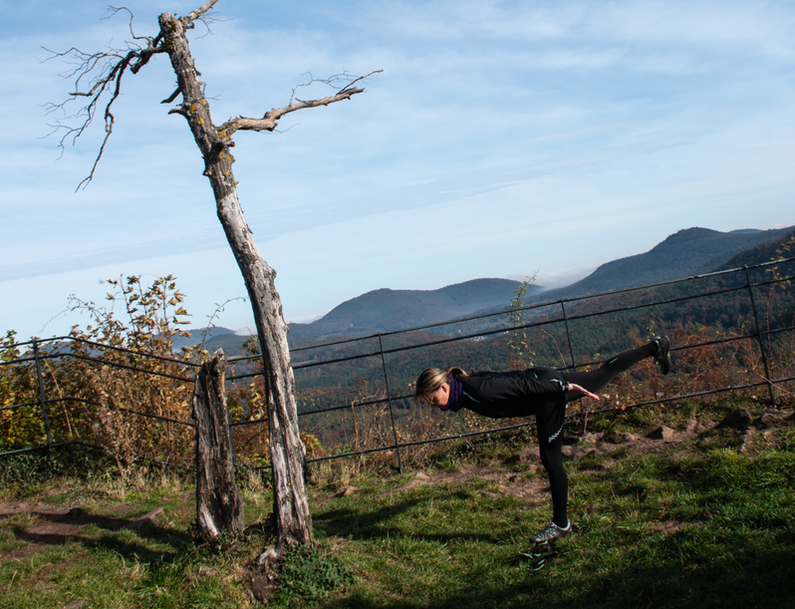 For me, personally, the gifts of the pandemic have been the online trainings I have been able to attend for the last 18 months. Whereas before the pandemic, I would have needed to travel at least within Europe, I can now take some further education from home via the internet. This has enabled me to connect to colleagues from around the globe, from America, to South America, Europe and Asia, which has been a truly touching and enriching experience. Last weekend I had the privilege to attend a four day CPD with Ditte Marcher, senior teacher in the Bodynamic system, which is a form of body psychotherapy looking at the psychological potential of muscles in distinct developmental stages.
One of my most important learnings from that training, which was about attachment, bonding and connectedness, was the distinction between asking for support versus making demands. It’s the distinction between seeking safety together with another person vs. seeking safety through the other person. When I’m asking for support, I’m taking responsibility for my own needs; when I’m making demands, I’m asking the other person to fulfil my needs and become responsible for my happiness, well-being, safety, etc. Ultimately, we’re dependent on one another and being self-sufficient is an illusion. However, it’s not the responsibility of other to fulfil our needs; it’s our own responsibility. Taking responsibility for our own needs, including safety, does not mean we can do it by ourselves. Most of us need to learn to ask for support and then to take it in when it’s offered. If someone can’t support us or does not give us what we need, we don’t lose our right to support and safety, it simply means we might have to re-orient. When was the last time you made someone else responsible for your safety, happiness or well-being instead of owning it yourself? 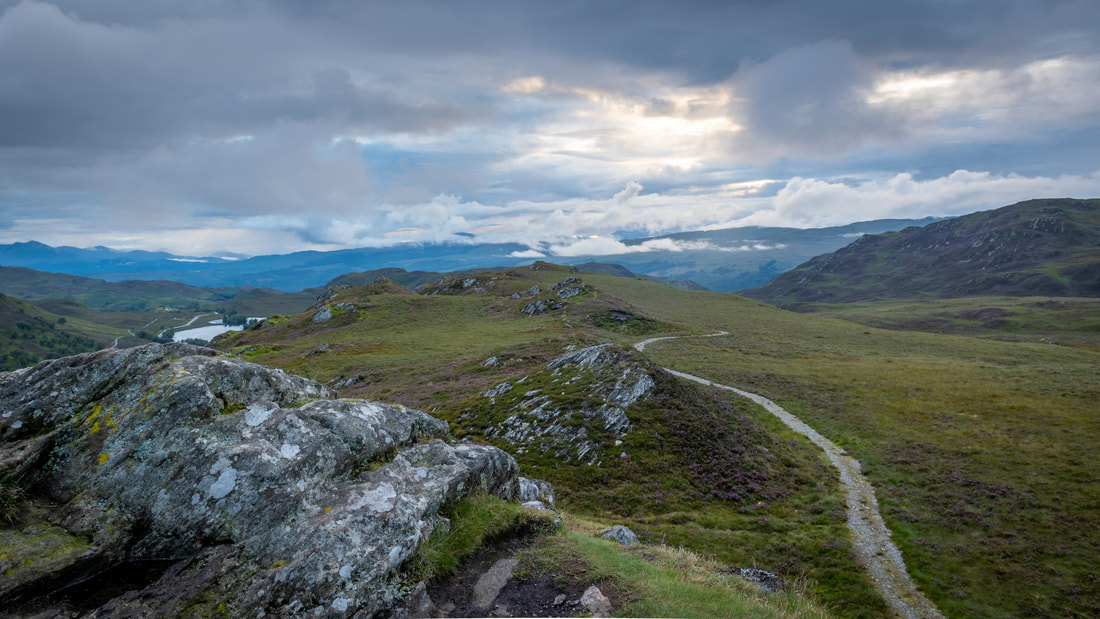 For our summer holidays, Brian and I went to Scotland for a week. We took our mountain bikes and planned a couple of routes. The first ride around Aviemore was long, but beautiful and classed as “super easy” from a mountain bike perspective. The second trip near Torridon, even though apparently in the “all skill level” category, according to my app, turned out very differently…
It started off easy with a wide dirt road around a beautiful loch, which turned into an interesting muddy single track, which then moved into a gravel road that was super steep and then it stopped… The following two and a half hours were very insightful, painful and inspirational all at the same time. The scenery was stunning, it was very remote and there was not a single person in sight. However, we had to push the bike up the hill! I had never heard of the term “hike a bike” and was introduced to this concept on an experiential level right there. Normally you would carry your light weight mountain up the hill. Mine, a definitely more economical version, weighed so much, that carrying it up the hill was out of the question. So we pushed and lifted; and pushed and lifted over rocks and through streams. We averaged 3 km/h !!! After 30 minutes of exhausting exercise, I realised that the remaining 8 kilometres would not be any different. After I understood that and also felt that there was no point in blaming anybody, something really interesting shifted inside of me. Peace and a very deep rooted acceptance of the situation emerged. We had enough daylight, and even though we did not have enough water, I had made the decision that it was safe to drink out of the stream - and it was (after some small doubts that came after I drank the water…). I was grateful for every inch we could ride, even though there were few. At the same time, I surrendered to the fact that it was tough. I was elated when we reached the top, even though we could not ride down either…. The steep descent, including rock gardens, wore my brakes out, but somehow even the crossing of a river could not detract from my inner peace. There were moments where I thought I could not do it and it was exhausting, but there was absolutely no chatter in my mind and I somehow managed to tap into a pool of inner resources and guidance that I did not know I had. It was a truly magical experience, even though outright dangerous at times. I liked the person I found within myself when I pushed the bike up the mountain; a person that can dig deep and find some strength from nowhere; a person that was at peace. I very much feel that this is within all of us. In those moments when we think we cannot do it, when we feel we had enough or want to give up, there is something else that can come in and support us. Let it. |
BlogYoga, well-being and mindfulness... always walk in beauty. Categories
All
Archives
September 2022
|
 RSS Feed